Tel: +86-13363315852 E-mail: lynn@frankmesh.com
English
- All
- Product Name
- Product Keyword
- Product Model
- Product Summary
- Product Description
- Multi Field Search


Grade 316L: An austenitic, low-carbon stainless steel with excellent corrosion resistance.
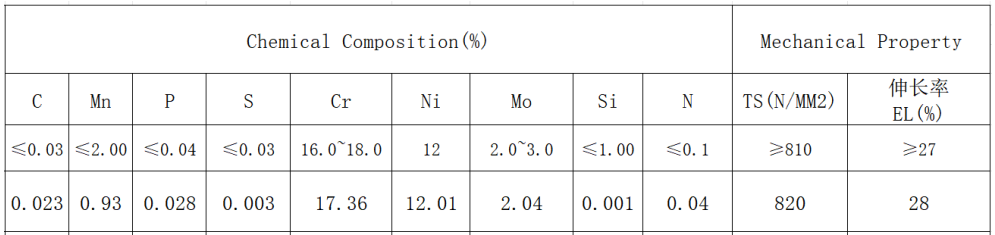
Composition: Cr (16-18%), Ni (10-14%), Mo (2-3%), along with trace Si, Mn, P, and S.
Key Feature: Molybdenum enhances resistance to chlorides, acids, and pitting corrosion.
Ultra-Fine Diameter: 0.018mm (18 microns), approximately 1/4 the thickness of a human hair.
High Strength & Ductility: Tensile strength ranges from 1000–2000 MPa, with elongation of 10–30%.
Corrosion Resistance: Superior performance in harsh environments (seawater, chemicals, medical saline).
Biocompatibility: Meets ISO 10993 standards for medical implants.
Temperature Resistance: Stable from -200°C to 600°C.
Medical: Surgical sutures, stents, neural electrodes, minimally invasive devices.
Electronics: Micro-coils, sensors, vacuum tube components.
Industrial: Precision filters (e.g., fuel injection systems), anti-corrosion meshes.
Research: Microfabrication, reinforcement in composites (e.g., ceramics/polymers).
Multi-Pass Wire Drawing: Progressive reduction from thicker wire to 0.018mm, with intermediate annealing to relieve stress.
Surface Finishing: Electro-polishing or coatings (e.g., PTFE) for smoothness and reduced friction.
Quality Control: Laser micrometers ensure ±0.001mm tolerance.
Handling Challenges: Requires tension-controlled spooling due to extreme flexibility.
Cost Factor: 50–100× more expensive than standard steel wire, driven by purity and precision.
ASTM A580: Standard specification for stainless steel wire.
ISO 5832-1: For surgical implant materials.